
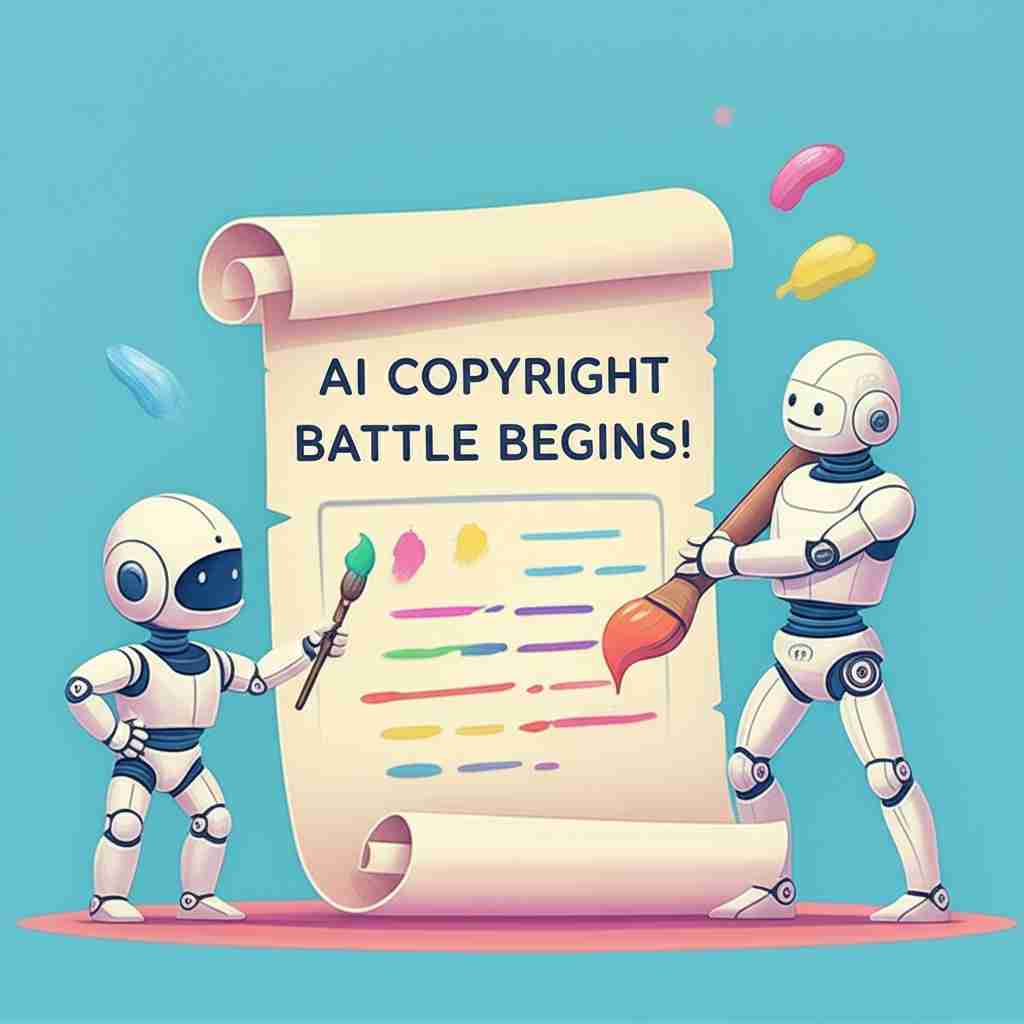
AI Companies Start Winning the Copyright Fight: Legal Battles and the Future of Creative Content
Introduction: The Turning Tide of Copyright and Artificial Intelligence
Artificial Intelligence (AI) is rapidly transforming creative industries, bringing new opportunities—but also sparking some of the fiercest legal battles in recent memory. The courtroom drama isn’t just academic: recent lawsuits by media giants Disney and Universal against AI image generator Midjourney highlight an urgent, high-stakes conflict over copyright, art, ownership, and the future of digital creativity. As AI companies begin to succeed in defending their innovative platforms, the landscape of content creation and copyright is being reshaped before our eyes.
The Rise of AI-Generated Content and Copyright Lawsuits
The explosion in popularity of generative AI tools has created an endless stream of creative output—from artwork to videos to literature. Platforms like Midjourney allow anyone to conjure anything from Batman to Mickey Mouse with a few keystrokes. Yet this newfound accessibility has ushered in complex legal challenges:
- Widespread Copyright Infringement: Disney and Universal allege that Midjourney’s AI routinely generates thousands of images that infringe on their intellectual property every single second.
- Quality and Accessibility: Advances in technology have drastically lowered the cost and barrier for creating media—what previously took entire studios and millions of dollars can now be replicated by fans with a $500 investment and a prompt.
- Emergence of Viral AI-Created Stories: Fan projects like “Greg the Stormtrooper”—short videos set in the Star Wars universe, fully AI-produced—demonstrate both the potential and threat AI poses to traditional content producers.
This proliferation of AI-generated works has understandably put immense pressure on leading entertainment companies, who must now reckon with scenarios where unofficial content rivals official productions in both quality and reach.
Unpacking the Legal Gray Areas: Who Can Be Held Responsible?
One of the core difficulties is that, while AI can rapidly produce imagery clearly inspired by (or sometimes nearly indistinguishable from) iconic characters, the legal status of both the technology and its outputs remains hazy. Key challenges include:
- Authorship and Artistic Merit: Courts are still grappling with whether AI-generated works qualify as “art” or can be copyrighted at all. If a machine creates something without significant human intervention, does it even meet the legal threshold for creative work?
- Infringement Without Copyright? If AI-generated content itself cannot be copyrighted, can it truly infringe on existing copyrights? Or does it exist in a legal limbo?
- Liability Complexities: Is the liability with the AI developers (like Midjourney), the users inputting prompts, or somewhere else entirely? Companies like Midjourney argue that their code is general-purpose—they can generate anything from bunnies to superheroes. So, why should they be responsible for infringing results?
These questions ensure that the battle will be drawn out, with arguments on all sides over where accountability truly lies.
An Industry on the Verge of Change: Financial Firepower and Business Realities
While it may seem that colossal studios like Disney and Universal could easily overwhelm newer tech startups through prolonged litigation, the reality is more nuanced. Consider the following:
- Economic Strength of AI Companies: Founded in 2021, Midjourney earned over $200 million in revenue in its first year and surged to $300 million in 2023 alone, providing significant resources to defend itself in court.
- Democratization vs. Control: The massive growth in AI services, and their rising demand, encourages these companies to maintain a “Wild West” environment—where anyone can create anything—rather than cede ground to copyright restrictions.
- Business Model Evolution: As open-source AI platforms advance and rival proprietary systems, companies may eventually pivot to licensing official AIs for branded content, rather than policing infringement across the internet—an arguably more practical and revenue-friendly approach for all.
Ultimately, this sets the stage for a legal and economic reshuffling, with traditional gatekeepers challenged both technologically and financially by nimble, well-funded AI startups.
A study conducted at The Guardian (AI companies start winning the copyright fight) found that the shifting legal environment increasingly favors AI companies amid sweeping copyright disputes. The report highlights key examples, such as recent court decisions that question whether AI-generated art meets the requirements for copyright protection. Notably, the inability to clearly define AI authorship is leading courts to scrutinize plaintiffs’ claims more critically. This research underscores that, while entertainment conglomerates mount significant legal challenges, the tide is turning toward an ecosystem where AI companies are not only surviving but shaping the very rules by which creative industries will operate.
The Future of Entertainment: Opportunities and Unresolved Questions
With AI-generated content gaining legitimacy—and legal victories—what could the creative landscape look like in the next few years?
- Democratized Storytelling: Low-cost, high-quality tools mean passionate fans or small creators can produce entire movies, comics, or books at a fraction of the traditional cost. This leads to a rich diversity of voices and formats.
- Competition and Innovation: Established studios may be compelled to “up their game,” producing better content to stand out against high-quality fan creations.
- Licensed AI Platforms: Major intellectual property owners might eventually monetize their brands by offering official AI tools—essentially licensing fans or creators to generate derivative works under specific guidelines.
- Unanswered Legal Questions: The discussion continues on whether AI itself can be a creator, who owns the outputs, and how (or if) current laws should be updated to reflect AI’s role in art. The future likely holds a hybrid approach, with carefully crafted regulations and new business models for content generation and distribution.
This dynamic—and at times, chaotic—environment will force everyone involved to rethink what it means to create, own, and share artistic content in the AI era.
Conclusion: Preparing for a New Creative Reality
The victory streak of AI companies in recent copyright battles signals profound changes ahead, not just for lawyers or studios, but for creators and consumers around the world. As AI technologies blur the boundaries between creator and tool, the definition of “original” art is being re-examined—and so are the very laws designed to protect it. For audiences and innovators alike, the message is clear: the future will belong to those who embrace both technology and adaptability.
Key takeaways moving forward:
- Expect ongoing legal battles—but also evolving opportunities for collaboration and new licensing models.
- If you are a creator, learn about AI’s capabilities and limitations to stay ahead in this shifting landscape.
- As a consumer, anticipate a vastly broader array of entertainment options—tailored by both professionals and passionate fans.
- For copyright owners, the imperative will be to innovate on value creation, not just protection.
Ultimately, as the lines blur between AI and artistry, everyone with a stake in creativity should remain informed and ready to adapt. The copyright fight is not just about protecting the past—it’s shaping the stories of tomorrow.
About Us
At AI Automation Sydney, we help businesses harness the power of AI to streamline operations and boost creativity. As the future of content creation evolves alongside advances in AI and copyright, our tailored automation solutions empower local companies to stay adaptable and thrive in a changing digital landscape.