
Artificial Intelligence and the Future of Education: Opportunities, Challenges, and the Path Forward
In recent years, artificial intelligence (AI) has transformed countless industries, but perhaps nowhere is its disruptive potential more profound—or more hotly debated—than in education. As AI-powered tools increasingly shape how students learn, how teachers teach, and what knowledge is valued, many are left wondering: What does the future of education look like in the age of AI, and how should we navigate this rapidly changing landscape?
1. The Current Crisis: Engagement, Achievement, and the Changing Purpose of Education
Education is facing a critical juncture. Recent trends reveal a troubling decline in student engagement and achievement. For instance, while 40% of high school seniors in 1976 had read six or more books for fun, that number has reversed, with 40% now not having read a single book for enjoyment in the past year. Test scores confirm this downward trend in reading and literacy, with the COVID-19 pandemic accelerating learning loss. Professors, even at elite universities, report students struggling with the same reading loads once taken for granted.
Compounding these challenges, generative AI systems—such as GPT-based models—now perform many tasks that were once central to education including:
- Summarizing books in seconds
- Writing essays and generating content
- Solving math problems, showing steps
- Passing standardized tests as well as, or better than, students
This raises unsettling questions: If AI can do schoolwork for our children, what is education for? How do we know if today’s curriculum is preparing students for a future we cannot clearly predict? The traditional model—where academic achievement is a reliable gateway to economic success—is being undermined, not just by AI, but by wider societal change.
2. Rethinking What and How Students Should Learn
With machines now capable of replicating many routine cognitive tasks, the very purpose of education is being challenged. According to Rebecca Winthrop, Director of the Center for Universal Education at the Brookings Institution, educators and parents should pivot to three guiding questions:
- Why do we educate? Is it solely to prepare students for jobs, or also to help them flourish as human beings?
- How do students learn best? Decades of research reinforce that learning happens when students are motivated and engaged—actively discovering, creating, and reflecting on knowledge, not merely absorbing it.
- What should students learn? Beyond facts, the skills to navigate uncertainty, think critically, remain flexible, and engage cooperatively have never been more important.
Traditional education models often treat knowledge as a commodity to transmit, but education must now be more than a transactional process. Students need experiences that develop:
- Critical thinking and judgment—distinguishing real from fake information
- Creativity—solving novel problems
- Self-awareness and social-emotional skills
- Capacity for deep reflection and meaning-making
Distressingly, many young people fall into “passenger mode,” coasting through schoolwork (often with the help of AI tools), disconnected from meaningful engagement and failing to build the cognitive and emotional ‘muscles’ central to lifelong learning.
3. Personalized Learning: AI as Tutor or Temptation?
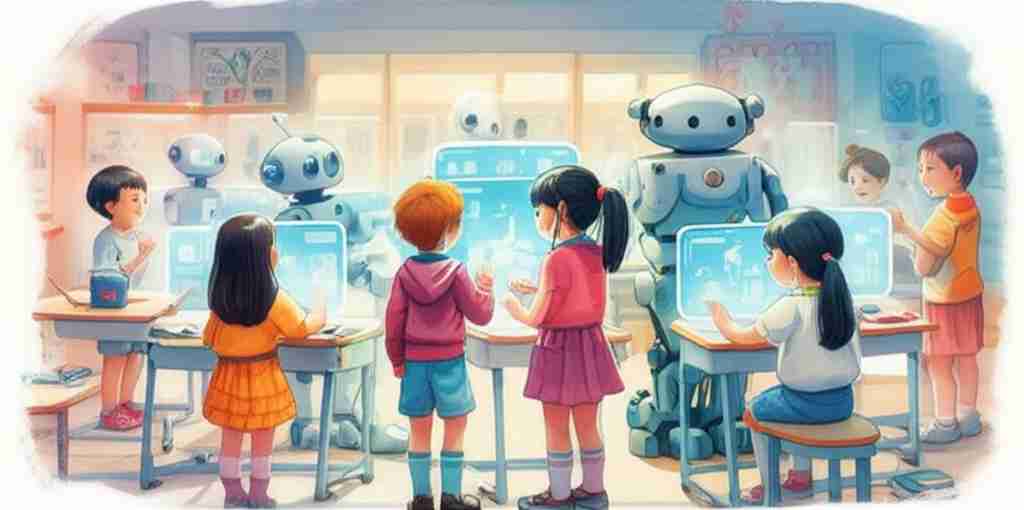
AI’s greatest promise in education may lie in its ability to personalize learning at unprecedented scale. Imagine every student having a virtual tutor tailored to their preferred learning style—visual, auditory, or interactive—and pacing. AI can provide targeted practice, adaptive feedback, and even creative content delivery (like turning lessons into poems or podcasts).
- AI can support teachers by automating routine grading and administrative tasks, freeing up time for deeper human-to-human interaction.
- AI-powered tools give students instant access to explanations, resources, and practice opportunities that would otherwise require specialized tutors.
- For neurodivergent or special needs learners, AI can bridge support gaps and enable more individualized assistance than a single teacher can provide in a crowded classroom.
However, unchecked reliance on AI may exacerbate some of education’s worst tendencies:
- Students may use AI to shortcut assignments, bypassing the thinking and effort required for real understanding.
- A frictionless, automated approach can rob young learners of the opportunity to struggle productively through challenges, undermining persistence and resilience.
- Over-personalization risks isolating students from shared classroom experiences and group problem-solving that foster social growth.
As Winthrop and other experts caution, AI should augment—not replace—teachers, and must be deployed thoughtfully to avoid turning the classroom into a screen-filled, isolated environment. Still, the prospect of using AI to help teachers better manage diverse learning needs, motivate students, and enable more project-based, collaborative learning remains a powerful opportunity—if implemented carefully.
4. Building an Equitable and Evidence-Based Approach
A study conducted at Daily Sabah—summarized in their op-ed Artificial intelligence and the future of education—highlights both the transformative potential and the critical challenges of integrating AI into educational systems. The research finds that AI can dramatically improve access and outcomes in contexts where high-quality teaching is scarce. For example, trials in Nigeria and Malawi demonstrated that targeted use of AI tutors led to learning gains equivalent to two years of traditional English learning in just six weeks for some students. The study also underscores the need for robust guardrails: AI systems must be designed specifically for learners, with input from child development experts, teachers, and regulators to ensure safety, privacy, and genuine educational benefit. Importantly, the research calls for governments, not just commercial entities, to lead in evaluating, regulating, and responsibly deploying educational AI tools to avoid repeating past mistakes made with unregulated screen technology in schools.
Some core principles for safe, equitable, and effective AI integration in education include:
- Use AI only to address real, well-defined educational problems—avoid technology for technology’s sake.
- Prioritize deployment in areas of greatest need:
- Students without access to quality tutors
- Under-resourced schools
- Learners with special educational needs
- Design with equity in mind: Consider language diversity, access to devices, and connectivity gaps to prevent widening the digital divide.
- Ensure human oversight: AI should empower educators, not replace them. Adult guidance is crucial for managing risks and promoting depth, ethics, and wellbeing.
- Implement robust data privacy and safety protections: Avoid emotionally manipulative or addictive designs, and ensure students’ data is secure.
- Promote AI literacy: Teach students (especially older learners) what AI is and isn’t, how it works, and its ethical—a key skill for their future civic and professional lives.
5. Practical Guidance: Navigating the Uncertain Future
In a world where the economy and society are rapidly evolving—where today’s degrees and grades may no longer guarantee tomorrow’s opportunities—families, educators, and policymakers need new ways to gauge educational success. According to education experts:
- Monitor student agency: Are children able to reflect on their learning, pursue new knowledge, and connect their interests to the wider world? Grades and test scores alone do not capture this.
- Value human interaction: As AI automates more cognitive tasks, social, emotional, and collaborative skills will become ever more essential.
- Foster deep attention and reflection: Ensure that students have opportunities to engage with books, sustained projects, and rich discussions, building cognitive endurance and self-regulation—capacities AI cannot replace.
- Champion oracy: Speaking and listening skills are increasingly vital in a world where credentials are demonstrated through communication, collaboration, and creativity.
For parents and teachers considering how best to prepare children for the AI age:
- Support opportunities for children to find their “spark”—passions and projects that motivate genuine, lasting engagement.
- Advocate for carefully designed, evidence-based AI tools that augment (not supplant) meaningful human relationships in learning.
- Push for strong guardrails: privacy, age-appropriateness, and human oversight are non-negotiable.
- Encourage screen-free environments for young children, and adopt age-appropriate AI and digital literacy instruction only as students mature.
Conclusion: Charting a Balanced Path Forward
Artificial intelligence offers remarkable promise for education, with the potential to shrink achievement gaps, personalize learning, and empower both students and teachers. But this potential will only be realized if we proceed with caution, evidence, and humanity at the center. Schools must not become testing grounds for unproven technologies. Rather, they should evolve into spaces where AI assists—but does not replace—the essential work of guiding young people to reason, create, and thrive together.
As we chart the course for education in the AI era, let’s ensure that technology amplifies what matters most: curiosity, engagement, ethical decision-making, and the enduring value of human connection and attention. By asking not just what AI can do, but what our children truly need, we can build a future of education that is both innovative and deeply humane.
Citation: Research summarized from Artificial intelligence and the future of education, Daily Sabah.
About Us
At AI Automation Sydney, we believe in responsible, thoughtful use of AI—helping organisations harness smart automation to enhance learning, engagement, and efficiency. Inspired by the evolving role of artificial intelligence in education, we partner with schools, training providers, and businesses to design solutions that empower people while keeping human connection at the heart of progress.