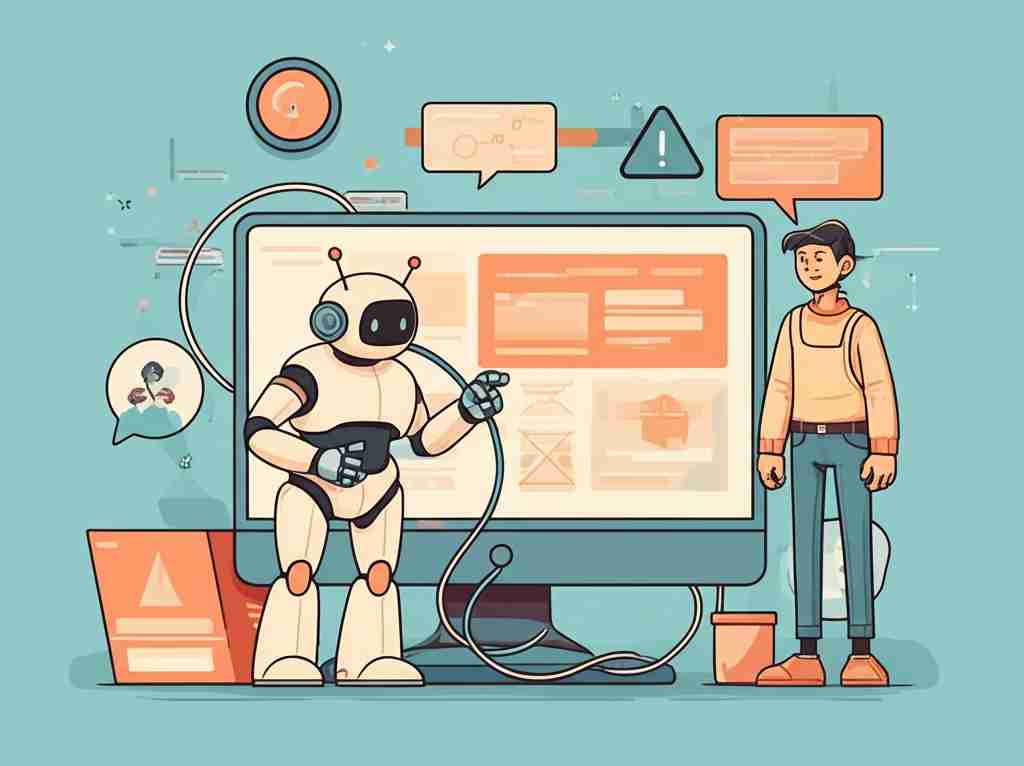

The Rise of Virtual Assistants: A New Era in Personal Technology Is Here to Stay
In recent years, our daily interactions with technology have changed dramatically. Gone are the days when computers and smartphones simply responded to commands—now, they anticipate our needs, answer our queries, and perform complex tasks on our behalf. This new wave of artificial intelligence (AI) has ushered in an era where virtual assistants are not just helpful add-ons, but indispensable companions that are reshaping the fabric of personal and professional life. From managing our homes to aiding researchers and engineers, the practical impact of these AI-driven agents is undeniable. But what makes today’s virtual assistants so powerful, and why does it seem like they’re here to stay? Let’s explore the transformative potential, real-world applications, and future prospects of virtual assistants as we step into a new era of personal technology.
Understanding the Evolution: From Simple Tools to Intelligent Agents
Our journey with AI began with basic chatbots and voice assistants that answered simple questions or played music on request. However, the landscape has greatly evolved. Today’s AI agents—and what we now broadly call virtual assistants—are:
- Goal-oriented: They don’t just respond to requests. They understand user intents, make plans, and take action to fulfill specific objectives.
- Context-aware: Modern assistants can observe their environment, use available data, and adapt to changing circumstances, just like a human might.
- Problem-solvers: They simulate human reasoning and can even emulate non-human behaviors, such as modeling cell interactions or simulating autonomous vehicles for engineering purposes.
At their core, these agents leverage recent breakthroughs in language models—powerful AI systems such as ChatGPT—to plan and execute tasks. Unlike their predecessors, they can interact not only with software, but also with data and hardware, adjusting their strategies based on real-time feedback.
How Virtual Assistants Are Transforming Everyday Life
The impact of virtual assistants already extends well beyond simple convenience. Their integration into various areas of daily life demonstrates their versatility and value:
- Home automation: Control lighting, temperature, security systems, and more—all with a simple voice command or automated routines personalized to your lifestyle.
- Schedule management: AI agents can coordinate meetings, send reminders, and optimize your calendar to increase productivity.
- Healthcare support: Virtual assistants help patients monitor medication schedules, track health metrics, and connect with medical professionals as needed.
- Education and self-improvement: Personalized learning plans, study reminders, and real-time answers to student questions make AI companions an invaluable educational resource.
These assistants are also extending their reach in professional settings, aiding doctors in patient management, researchers in data analysis, and engineers in designing complex systems. They not only automate mundane tasks but also empower users to tackle sophisticated challenges with greater ease.
The Science Behind Virtual Assistants: Authority and Evidence
A study conducted at Lifewire shed light on the extraordinary capabilities that set modern virtual assistants apart from their early counterparts. The research found that today’s AI agents are fundamentally different—not just responding to prompts, but actively engaging with software, hardware, and environments to accomplish complex goals. Key findings highlight the agents’ use of advanced language models, their adaptation to user context, and their increasing ability to simulate both human and non-human behavior. This robust scientific foundation underscores why virtual assistants are not just a passing trend, but a technology poised for long-term integration into our lives. Read the full study here.
New Frontiers: The Power of Multi-Agent Collaboration
The potential of virtual assistants expands exponentially when multiple agents work together. In these multi-agent systems, AI agents can:
- Simulate complex human interactions and social behaviors
- Model intercellular or systemic dynamics for scientific research
- Support team-based training for medical and engineering professionals
- Design, manage, and animate intricate virtual or augmented worlds
Such collaboration opens the door to revolutionary applications—imagine digital agents negotiating with one another, jointly diagnosing medical cases, or working in tandem to manage traffic flow in smart cities. As AI technology progresses, the intelligence and coordination exhibited by these agents will only deepen, potentially transforming industries from healthcare to entertainment and beyond.
Embracing the Future: Practical Takeaways for Individuals and Organizations
With these developments in mind, how can individuals and businesses fully leverage the rise of virtual assistants?
- Stay informed about emerging capabilities. As AI evolves, new features for scheduling, automation, and complex problem solving will become widely available.
- Prioritize integration. Connect virtual assistants with other devices, applications, or systems to maximize their value as centralized managers of routines and workflows.
- Balance convenience and privacy. Be attentive to data usage policies and choose trustworthy platforms when delegating sensitive tasks.
- Emphasize collaboration. Seek out solutions where AI agents work together—whether for automating business functions or enhancing personal productivity—to unlock greater benefits.
For organizations, the opportunity lies in customizing virtual assistants to industry-specific needs, be it healthcare, financial services, or research and development. Meanwhile, individuals can benefit from enhanced productivity, better time management, and improved access to information—turning virtual assistants into lifelong allies in both professional and personal growth.
Conclusion: Why Virtual Assistants Are Here to Stay
Virtual assistants have evolved from simple digital helpers to intelligent, adaptive agents capable of profoundly impacting how we live and work. Their ability to understand context, plan and carry out actions, and grow increasingly sophisticated with each technological advance means that their influence will only strengthen in the years ahead. With a strong foundation in advanced AI models and proven effectiveness as demonstrated by authoritative research, it’s clear: A new era in personal technology has arrived—and virtual assistants are not just a fleeting trend, but a permanent and essential fixture of the digital age.
About Us
At AI Automation Sydney, we make the power of AI virtual assistants accessible to local businesses. Our team designs custom solutions that streamline your operations, from automating routine tasks to integrating intelligent agents into daily workflows. As virtual assistants reshape how we live and work, we’re here to help you embrace this new era of personal technology with reliable, tailored AI automation.